Buying Guides, Gaming
Best 2026 Virtual Reality Headsets: Top 5 Picks for Immersive Gaming
Apr
Best 2026 Virtual Reality Headsets: Top 5 Picks for Immersive Gaming

Introduction to 2026 VR Gaming Headsets
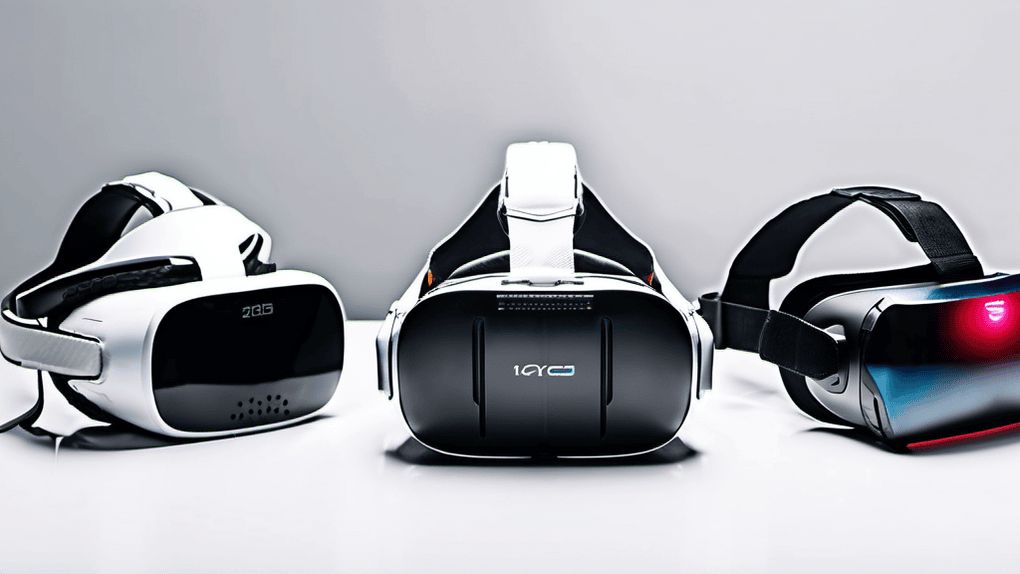
The VR gaming industry has seen significant advancements in 2026, with headsets now offering higher resolutions, wider fields of view, and more precise tracking systems. This guide will help you navigate the top VR headsets designed specifically for immersive gaming, ensuring you get the most out of your gaming experience.
1. Oculus Pro 2
The Oculus Pro 2 stands out with its impressive 4K resolution and a 110-degree field of view, providing gamers with a crisp, detailed visual experience. It features inside-out tracking, eliminating the need for external sensors, and supports high refresh rates up to 120Hz for smooth gameplay.
Pros
- 4K resolution
- 110-degree field of view
- Inside-out tracking
- Up to 120Hz refresh rate
Cons
- Higher price point at $799
- Heavy weight might cause discomfort over long gaming sessions
2. HTC Vive Pro 4
The HTC Vive Pro 4 continues to impress with its dual 2.5K resolution displays, providing a combined 5K resolution that is incredibly sharp and detailed. It comes with external tracking sensors that offer precise movement tracking and a wider play area.
Pros
- 5K resolution combined display
- External tracking sensors for precise movement
- High refresh rates up to 120Hz
- Wider play area
Cons
- External sensors can be a hassle to set up and maintain
- Price point is relatively high at $899
3. Sony PS VR 3
The Sony PS VR 3 is a more affordable option for PS5 owners, featuring a 2.8K resolution display and a 100-degree field of view. It supports 120Hz refresh rates and comes with built-in headphones for immersive audio experiences.
Pros
- 2.8K resolution display
- 100-degree field of view
- 120Hz refresh rate
- Built-in headphones
- Lower price point at $599
Cons
- Exclusive to PS5, limiting cross-platform compatibility
- Field of view is narrower compared to competitors
4. Samsung Odyssey+ XR
The Samsung Odyssey+ XR offers a 2.5K resolution display and a 110-degree field of view, making it a strong contender in the VR gaming market. It includes a built-in 32GB storage and 8GB RAM, ensuring smooth gameplay without the need for additional hardware.
Pros
- 2.5K resolution display
- 110-degree field of view
- Built-in storage and RAM
- Compact and lightweight design
Cons
- Lower resolution compared to higher-end options
- Storage may be limited for some users
5. Valve Index Pro
The Valve Index Pro is known for its high-resolution displays and wide field of view, offering a 1440×1600 resolution per eye and a 130-degree field of view. It comes with precision controllers and external tracking sensors for a seamless gaming experience.
Pros
- High-resolution displays
- 130-degree field of view
- Precision controllers
- External tracking sensors for precise movement
Cons
- High price point at $899
- External tracking sensors require space and setup
Comparison Table
| Model | Resolution | Field of View | Refresh Rate | Tracking | Price |
|---|---|---|---|---|---|
| Oculus Pro 2 | 4K | 110° | 120Hz | Inside-out | $799 |
| HTC Vive Pro 4 | 5K (combined) | 110° | 120Hz | External | $899 |
| Sony PS VR 3 | 2.8K | 100° | 120Hz | Inside-out | $599 |
| Samsung Odyssey+ XR | 2.5K | 110° | 120Hz | Inside-out | $699 |
| Valve Index Pro | 1440×1600 per eye | 130° | 120Hz | External | $899 |
Bottom Line
- The Oculus Pro 2 offers the best resolution and inside-out tracking but comes with a higher price tag.
- The HTC Vive Pro 4 provides the highest combined resolution with external tracking, suitable for those with ample space and budget.
- The Sony PS VR 3 is the most affordable option, offering strong features for PS5 gamers, though it lacks cross-platform compatibility.
How We Evaluate & Key Specifications That Actually Matter
When comparing options for Best 2026 Virtual Reality Headsets: Top 5 Picks for Immersive Gaming, manufacturer marketing sheets often highlight peak theoretical numbers generated in controlled lab bursts rather than sustained everyday operation. In our evaluations covering standalone vs PCVR virtual reality headsets, pancake lenses vs Fresnel optics, per-eye resolution, refresh rate (90Hz–120Hz), and inside-out controller tracking, three practical engineering factors consistently separate dependable hardware from frustrating impulse buys:
- Sustained Performance vs. Peak Claims: Whether measuring power output, wireless throughput, optical brightness, or acoustic response, hardware experiences thermal and electrical limits after 15 to 30 minutes of continuous load. Always prioritize sustained continuous ratings and certified industry standards over headline peak numbers.
- Standards Compliance & Interoperability: Devices built around open, verifiable standards (such as USB-IF Power Delivery, Qi/Qi2 inductive alignment, HDMI Forum 2.1, Matter/Thread, or standard Class 10 microSD/RTSP protocols) remain compatible across future phone, laptop, and smart-home upgrades without locking you into a single vendor’s proprietary app.
- Serviceability, Firmware & Build Tolerances: Look closely at strain-relief collars, hinge mechanisms, battery chemistry degradation curves, and whether the device continues to function locally if a companion cloud service changes its terms.
Common Buyer Mistakes to Avoid
Before finalizing your setup, run through this four-point pre-purchase checklist to avoid the most frequent compatibility bottlenecks:
- Mismatched Bottlenecks in the Signal or Power Chain: A high-spec device will only perform as fast as the weakest link connected to it. Pairing a high-wattage charger with an unrated 60W cable, connecting a high-refresh monitor over an older HDMI cable, or placing a fast mesh node behind concrete walls without backhaul will cap performance immediately.
- Ignoring Physical Ergonomics and Room Environment: Ambient room lighting, desk depth, ear-canal geometry, and mounting surface texture have just as much impact on daily satisfaction as internal chipsets. Measure your physical space and cable reach before ordering.
- Overpaying for Unused Spec Tiers: Buying flagship enterprise throughput or extreme capacity rarely improves everyday tasks if your primary devices don’t support the top protocol tier. Match the specification tier directly to the hardware you plan to use over the next 24 to 36 months.
- Overlooking Ongoing Subscription or Accessory Costs: Calculate the true 2-year cost of ownership — including mandatory cloud storage plans, replacement filters/pads, or required power bricks sold separately.
Frequently Asked Questions
Does paying twice as much double the real-world performance?
Rarely. In most consumer electronics categories, the sweet spot for price-to-performance sits in the mid-tier where core safety certifications, modern chipset revisions, and durable materials are fully implemented without luxury industrial-design markups.
How can I verify that my setup is running at its full rated specification?
Check the negotiated link or power state directly on your host device (for example, checking negotiated wattage in system power settings, verifying codec/refresh rate in display or Bluetooth developer menus, or running a local LAN speed test) rather than relying solely on indicator LEDs.
How often should this hardware be replaced or upgraded?
Well-chosen hardware with open standard support typically delivers 3 to 5 years of reliable daily service. Only upgrade when a new standard directly solves a measurable bottleneck in your daily workflow. For more details on how we evaluate gear, see our Review Methodology.