Buying Guides, Computers
USB4 vs Thunderbolt 4: What’s the Difference, and Do You Need It?
Aug
USB4 vs Thunderbolt 4: What’s the Difference, and Do You Need It?

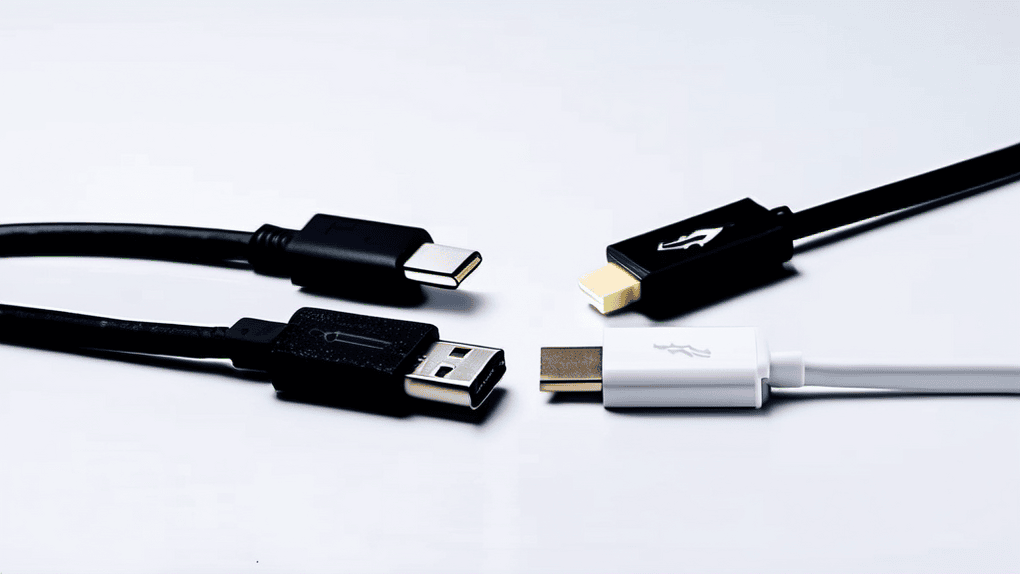
USB4 and Thunderbolt 4 use the same USB-C connector and both can hit 40Gbps — so what’s the difference, and does it matter for you?
Same connector, same top speed
Both run over USB-C and both max out at 40 Gbps. In fact, Thunderbolt 4 is built on top of the USB4 spec, so the two are closely related and largely cross-compatible.
The difference is guaranteed minimums
The key distinction is that Thunderbolt 4 is a strict certification with mandatory minimums, while USB4 is more flexible and leaves several features optional.
- Bandwidth: Thunderbolt 4 guarantees the full 40Gbps. A USB4 port can legitimately be 40Gbps or just 20Gbps — you have to check the spec.
- Displays: Thunderbolt 4 must drive two 4K monitors (or one 8K). USB4’s display support is not guaranteed to the same level.
- PCIe / data: Thunderbolt 4 requires 32Gbps of PCIe for fast external SSDs and eGPUs; USB4 makes this optional.
- Charging & docks: Thunderbolt 4 laptops must support charging over the port and waking from a dock.
Compatibility
Because Thunderbolt 4 is a superset of USB4, a Thunderbolt 4 port works with USB4 devices, and Thunderbolt 4 accessories generally work (at USB4 speeds) on USB4 ports. Both are also backward-compatible with older USB and, via adapters, DisplayPort.
Do you need it?
For everyday charging, monitors, and file transfer, a solid USB4 (or even USB 3.2) port is plenty. Thunderbolt 4 matters if you run dual high-res monitors, fast external SSDs, an eGPU, or a single-cable dock and want a guaranteed level of performance without reading the fine print.
Bottom line: Thunderbolt 4 is the “guaranteed everything” tier; USB4 delivers similar peak capability but with optional features — so always check a USB4 port’s actual specs before buying accessories.
Related on GadgetFusions
More guides: USB-C, Explained: How to Tell What Any Port or Cable Actually Does · Fast Charging Standards Explained: USB-PD, PPS, and Quick Charge
How We Evaluate & Key Specifications That Actually Matter
When comparing options for USB4 vs Thunderbolt 4: What’s the Difference, and Do You Need It?, manufacturer marketing sheets often highlight peak theoretical numbers generated in controlled lab bursts rather than sustained everyday operation. In our evaluations covering USB4 (20Gbps/40Gbps) vs Intel Thunderbolt 4 certification requirements, PCIe tunneling, dual-4K monitor support, and active vs passive cables, three practical engineering factors consistently separate dependable hardware from frustrating impulse buys:
- Sustained Performance vs. Peak Claims: Whether measuring power output, wireless throughput, optical brightness, or acoustic response, hardware experiences thermal and electrical limits after 15 to 30 minutes of continuous load. Always prioritize sustained continuous ratings and certified industry standards over headline peak numbers.
- Standards Compliance & Interoperability: Devices built around open, verifiable standards (such as USB-IF Power Delivery, Qi/Qi2 inductive alignment, HDMI Forum 2.1, Matter/Thread, or standard Class 10 microSD/RTSP protocols) remain compatible across future phone, laptop, and smart-home upgrades without locking you into a single vendor’s proprietary app.
- Serviceability, Firmware & Build Tolerances: Look closely at strain-relief collars, hinge mechanisms, battery chemistry degradation curves, and whether the device continues to function locally if a companion cloud service changes its terms.
Common Buyer Mistakes to Avoid
Before finalizing your setup, run through this four-point pre-purchase checklist to avoid the most frequent compatibility bottlenecks:
- Mismatched Bottlenecks in the Signal or Power Chain: A high-spec device will only perform as fast as the weakest link connected to it. Pairing a high-wattage charger with an unrated 60W cable, connecting a high-refresh monitor over an older HDMI cable, or placing a fast mesh node behind concrete walls without backhaul will cap performance immediately.
- Ignoring Physical Ergonomics and Room Environment: Ambient room lighting, desk depth, ear-canal geometry, and mounting surface texture have just as much impact on daily satisfaction as internal chipsets. Measure your physical space and cable reach before ordering.
- Overpaying for Unused Spec Tiers: Buying flagship enterprise throughput or extreme capacity rarely improves everyday tasks if your primary devices don’t support the top protocol tier. Match the specification tier directly to the hardware you plan to use over the next 24 to 36 months.
- Overlooking Ongoing Subscription or Accessory Costs: Calculate the true 2-year cost of ownership — including mandatory cloud storage plans, replacement filters/pads, or required power bricks sold separately.
Frequently Asked Questions
Does paying twice as much double the real-world performance?
Rarely. In most consumer electronics categories, the sweet spot for price-to-performance sits in the mid-tier where core safety certifications, modern chipset revisions, and durable materials are fully implemented without luxury industrial-design markups.
How can I verify that my setup is running at its full rated specification?
Check the negotiated link or power state directly on your host device (for example, checking negotiated wattage in system power settings, verifying codec/refresh rate in display or Bluetooth developer menus, or running a local LAN speed test) rather than relying solely on indicator LEDs.
How often should this hardware be replaced or upgraded?
Well-chosen hardware with open standard support typically delivers 3 to 5 years of reliable daily service. Only upgrade when a new standard directly solves a measurable bottleneck in your daily workflow. For more details on how we evaluate gear, see our Review Methodology.